

 Smit Halvadiya
 1. Introduction
In today’s fast-paced world, many working professionals find it difficult to take care of their health. Long office hours, constant meetings, tight deadlines, and family responsibilities often leave little to no time for exercise. But living a Healthy Lifestyle for Busy Professionals doesn’t mean spending hours in the gym. With small daily habits, smart lifestyle choices, and realistic goals, even the busiest professionals can improve their health, energy levels, and overall well-being.
2. Is Exercise the Only Way to Stay Healthy?
Exercise is important, but it is not the only way to stay healthy. A healthy lifestyle depends on several factors such as proper nutrition, quality sleep, stress management, hydration, and daily habits. This becomes even more important during pregnancy, when the body requires extra care, balanced nutrition, adequate rest, and emotional well-being. For busy professionals and expectant mothers alike, small lifestyle changes—such as mindful eating, sufficient sleep, staying hydrated, and managing stress—can support overall health and well-being, even without regular or structured workouts.
3. Smart Nutrition Tips for Healthy Lifestyle For Professionals With No Time
Nutrition plays a key role in maintaining a healthy lifestyle when exercise is limited. Busy professionals can focus on:
-Eating balanced meals with proteins, whole grains, fruits, and vegetables
-Avoiding skipping meals, especially breakfast
-Choosing healthy snacks like nuts, fruits, or yogurt
-Limiting processed foods and sugary drinks
Smart nutrition helps maintain energy levels, improves concentration, and supports long-term health.
4. The Importance of Sleep for a Healthy Lifestyle
Sleep is often the first thing overworked professionals sacrifice, even though it plays a major role in maintaining a Healthy Lifestyle for Busy Professionals. Lack of proper sleep can cause constant fatigue, increased stress, weight gain, and reduced focus at work. Prioritizing 7–8 hours of quality sleep each night can make a noticeable difference in your energy, mood, and productivity. You can improve your sleep by:
-Maintaining a consistent sleep schedule
-Reducing screen time before bed
-Creating a calm sleeping environment
Good sleep acts as a natural recovery tool, especially for those with no time for exercise.
5. Stress Management Tips for Busy Professionals
Chronic stress can negatively impact both physical and mental health. Busy professionals can manage stress by:
-Practicing deep breathing or meditation for a few minutes daily
-Taking short breaks during work hours
-Setting clear boundaries between work and personal life
-Engaging in hobbies or relaxing activities
-Effective stress management is a key part of a Healthy Lifestyle for Busy Professionals, as unmanaged stress can affect both mental and physical health. Building healthy stress-relief habits also supports a Healthy Lifestyle for Busy Professionals, even with a demanding routine.
6. Healthy Office Habits Everyone Should Follow
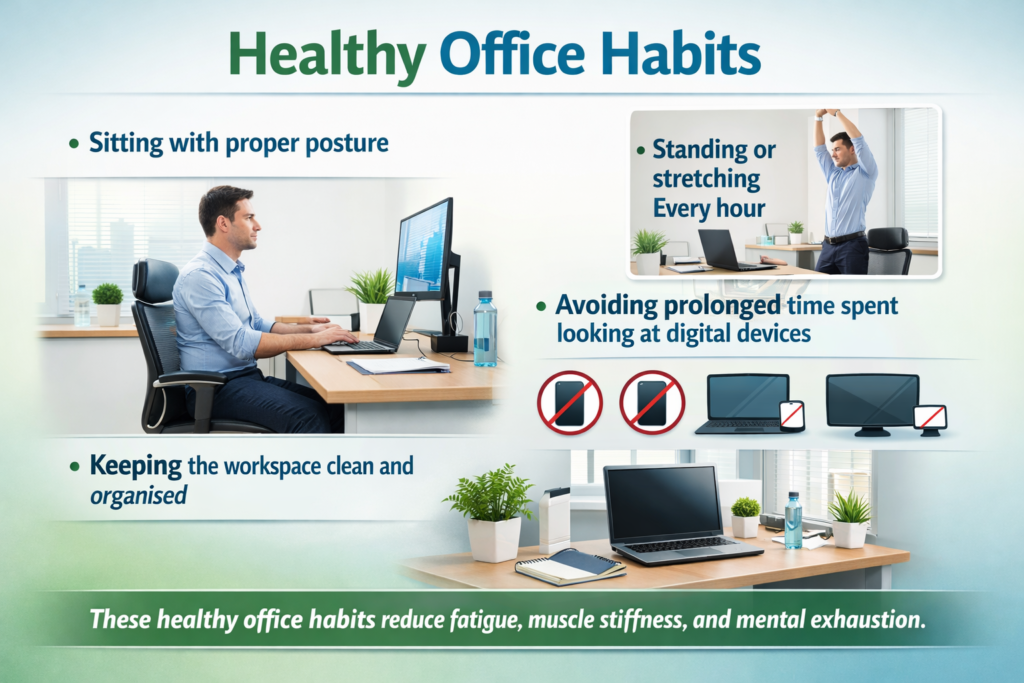
Simple office habits can improve health without taking extra time:
-Sitting with proper posture
-Standing or stretching for a few minutes
Every hour
-Avoiding prolonged time spent looking at digital devices Like smartphone, tablets,computers or TVs.
-Keeping the workspace clean and organised.
These healthy office habits reduce fatigue, muscle stiffness, and mental exhaustion.
7. Role of Hydration in a Busy Schedule
Hydration is often overlooked in a busy schedule, yet it plays a vital role in maintaining health. Drinking enough water:
-Boosts energy levels
-Improves digestion
-Enhances focus and concentration
Busy professionals should keep a water bottle nearby and aim to drink water regularly throughout the day.
8. Common Mistakes Busy Professionals Make About Health
Many busy professionals unknowingly harm their health while trying to manage work and personal life, making it harder to follow a Healthy Lifestyle for Busy Professionals, especially due to:
-Skipping meals
-Addiction of caffeine
-Ignoring sleep
-Believing that exercise is the only solution often makes it harder to maintain a Healthy Lifestyle for Busy Professionals, especially when time is limited.
Understanding these common mistakes helps professionals adopt a more balanced and realistic approach to a healthy lifestyle.
9. Realistic Health Goals for People With No Time
Setting unrealistic health goals often leads to frustration. Instead, professionals with no time should focus on:
-Eating one healthy meal daily
-Improving sleep quality
-Reducing stress gradually
-Making small daily lifestyle improvements
Realistic health goals are easier to maintain and more effective in the long run.
10. Technology and Apps That Support a Healthy Lifestyle
Technology can be a powerful tool for busy professionals. Health apps can help with:
-Meal planning and calorie tracking
-Sleep monitoring
-Stress management and mindfulness
-Hydration reminders
Using the right apps makes it easier to maintain a healthy lifestyle despite a tight schedule.
11. Healthy Lifestyle Tips for Work-From-Home Professionals
-Work-from-home professionals face unique health challenges. To stay healthy:
-Maintain a fixed daily routine
-Avoid continuous sitting
-Eat home-cooked meals
-Separate work time from personal time
These simple habits support both physical and mental well-being.
12. FAQs
Q1. Can I stay healthy without regular exercise?
Yes, a healthy lifestyle is possible through proper nutrition, sleep, hydration, and stress management.
Q2. What is the most important habit for busy professionals?
Consistent sleep and balanced nutrition are the most important habits.
Q3. How can I manage stress with no free time?
Short breathing exercises, breaks, and setting work boundaries can help manage stress effectively.
Q4. Are health apps really useful?
Yes, technology and apps can support healthy habits by saving time and improving consistency.
[…] healthy foods can raise blood sugar if taken in large portions. Portion control is the key to diabetes […]
[…] Time management problems […]
[…] relating to examinations and planning for the future affects students, whereas professionals are caught up in work and balancing work and […]