
 Smit Halvadiya
 1. Introduction
Malaria has been ranked among the oldest and most lethal infectious diseases in the world, having infected millions of patients annually. Despite improvements in modern medicine and public health advancements, malaria has proved to be a serious global health problem in tropical and subtropical countries.
A discovery of a malaria vaccine has been regarded as among the greatest medical achievements of the 21st century. However, before going into further detail about a malaria vaccine, it is appropriate to provide a description of what a malaria infection entails as well as the need for a vaccine against this disease.
Note: Generally, this article provides a comprehensive description of a malaria vaccine and may not be applicable to every individual.
2. What Is Malaria?
Malaria is a deadly disease contracted from a parasite called Plasmodium. The parasite is transmitted to a human being as a result of being bitten by an infected female Anopheles mosquito. The parasite enters the human body and migrates to the liver before causing an infection of red blood cells.
3. Symptoms of Malaria Parasite
- High fever and chills
- Headache
- Sweat
- Muscle & body pain
- Nausea and vomiting
3.1 In Severe Cases:
- Anemia
- Organ failure
- Coma
- Death
Children under five and pregnant women are most susceptible to the malaria parasite.
4. Global Cases of Malaria
Malaria continues to pose serious challenges in terms of the health of the population, especially in Africa and some regions of Asia as well as Latin America.
- Millions of cases are reported every year
- Hundreds of thousands of deaths each year
- Sub-Saharan Africa has the heaviest burden
Despite interventions such as insecticide-treated bed net protection, indoor residual spraying of insecticides, and antimalarial drugs, the disease is still on the increase. It is for this reason that a vaccine against the disease is needed.
5. Why Is a Malaria Vaccine Needed?
The prevention of malaria has never been an easier task, given the complicated life cycle of the malaria parasite. Unlike viruses or bacteria, for example, it alters its forms while it is in the human body.
6. Current Methods of Malaria Prevention
- Insect resistance to insecticides
- Resistance to antimalarial medicines among parasites
- Inconsistent use of bed nets
- Inadequate access to healthcare facilities in rural regions
A vaccine can provide another level of protection that can help decrease illness and deaths when used in combination with other preventive strategies.
7. Comprehending the Malaria Parasite
The life cycle of the malaria parasite is quite complex, as it requires both the mosquito and the human host to complete.
7.1 Stages of the Life Cycle:
- Transmission through mosquito bite
- Stage in liver – multiplies in liver cells
- Blood stage – infects red blood cells and leads to symptoms
It has been difficult to create a good vaccine for the parasite as it keeps changing stages.
8. What Is a Malaria Vaccine?
A malaria vaccine will help the immune system identify the parasite and fight it prior to causing severe disease. Malaria vaccines are not intended to prevent the disease but are intended for the following primary purposes:
- Minimize risk of serious illness
- Lower rates of hospitalization
- Reducing deaths due to malaria
Even a partial success can appear to yield the benefit of saving millions of lives.
9. Approved Malaria Vaccines
9.1 RTS,S/AS (Mosquirix)
RTS,S also known as Mosquirix was the world’s first malaria vaccine recommended for general use by the World Health Organization.
Key Features:
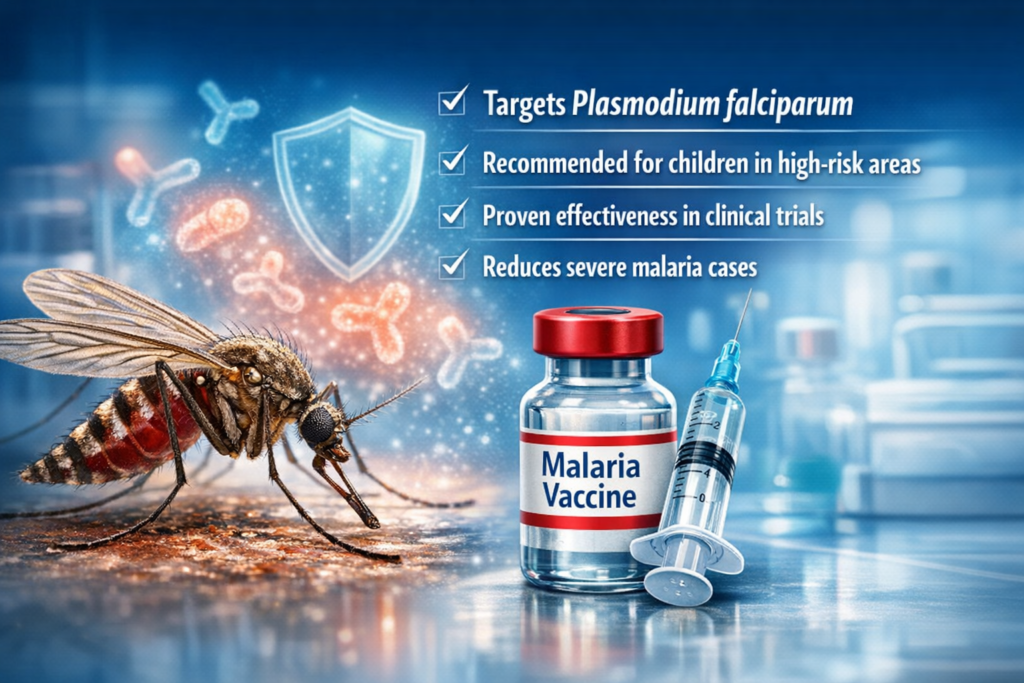
Clinical trials demonstrated that RTS,S was capable of lowering cases of malaria as well as preventing deaths when used in addition to other means of prevention.
9.2 Bharat Biotech – R21 Vaccine
R21 is a relatively new vaccine for the prevention of malaria, with results showing an even higher level of success.
Key Features:
- Efficacy higher than RTS,S trials
- Reduces production cost
- Easier to manufacture at a larger scale
- Suitable for mass vaccination campaigns
In this regard, this vaccine is considered a major step in fighting malaria.
10. How Does the Malaria Vaccine Work?
Malaria vaccines target the parasite prior to entering the bloodstream.
- The vaccine inserts a harmless component of the parasite
- The immune system develops antibodies
- When an actual parasite enters the body, it gets attacked by antibodies
- These reduce the likelihood of serious infection
Although it does not guarantee a complete shield against the disease, it helps to decrease its severity.
11. Advantages of Malaria Vaccine
1. Saves Lives
The major advantage of the malaria vaccine is the deaths that have been averted, mostly among young children.
2. Reduces Severe Illness
Vaccinated persons have fewer chances of developing complications like cerebral malaria or severe anemia.
3. Promotes Other Preventive Practices
Vaccines are effective when used alongside other methods such as the use of net protection and spraying compounds.
4. Enhances Community Health
There will be fewer cases of malaria, resulting in reduced pressure on healthcare systems.
5. Economic Benefits
Less healthcare spending and reduced absenteeism from work or school.
12. Safety and Side Effects
Malaria vaccines are considered relatively safe.
12.1 Common Side Effects:
- Mild fever
- Pain or swelling at injection site
- Fatigue
- Irritability in children
More serious side effects are rare, and the benefits outweigh the risks in high-risk areas.
13. Challenges in Malaria Vaccine Development
- Partial protection
- Multiple doses required
- Cost and distribution
- Complexity of the parasite
14. Malaria Vaccine in India & Other Endemic Nations
Countries such as India, Nigeria, Kenya, and Ghana are malaria-endemic.
14.1 Benefits of Vaccine Introduction:
- Protect vulnerable groups
- Combat child mortality
- Strengthen national malaria control programs
India is actively participating in malaria studies and vaccine development and is expected to include vaccines in future immunization programs.
15. The Vaccine’s Role in Eliminating Malaria
Immunization alone cannot eradicate malaria but plays a vital role in controlling it.
15.1 For Malaria Elimination:
- Vaccination programs should be extended
- Early intervention is required
- Public awareness needs to be heightened
A combined effort marks the key towards success.
16. Future of Malaria Vaccines
There appear to be bright prospects for malaria vaccines.
16.1 Current Research Includes:
- Vaccines with increased and sustained protection
- Single-dose vaccines
- Vaccines against multiple parasite stages
- Combination vaccines
Experts believe that new vaccines may soon aid in the eradication of malaria.
17. Conclusion
The anti-malarial vaccine is a great milestone in the history of global health. Though the vaccine is not a 100% solution, it has become a powerful tool in combating malaria in its most fatal forms. Alongside existing preventive measures, malaria vaccines can significantly reduce the impact of this deadly disease.
Further research, global collaboration, and strong health infrastructure are essential to ensure vaccines reach those most in need. With sustained effort, the hope of a malaria-free world may soon become a reality.