
 Smit Halvadiya
 1. Introduction
Disorders associated with the human ability to attend or pay attention to something or somebody affect millions of children, adolescents, and adults. The debate of ADD vs ADHD has existed for decades and consequently has caused confusion for parents and teachers, as well as adults.
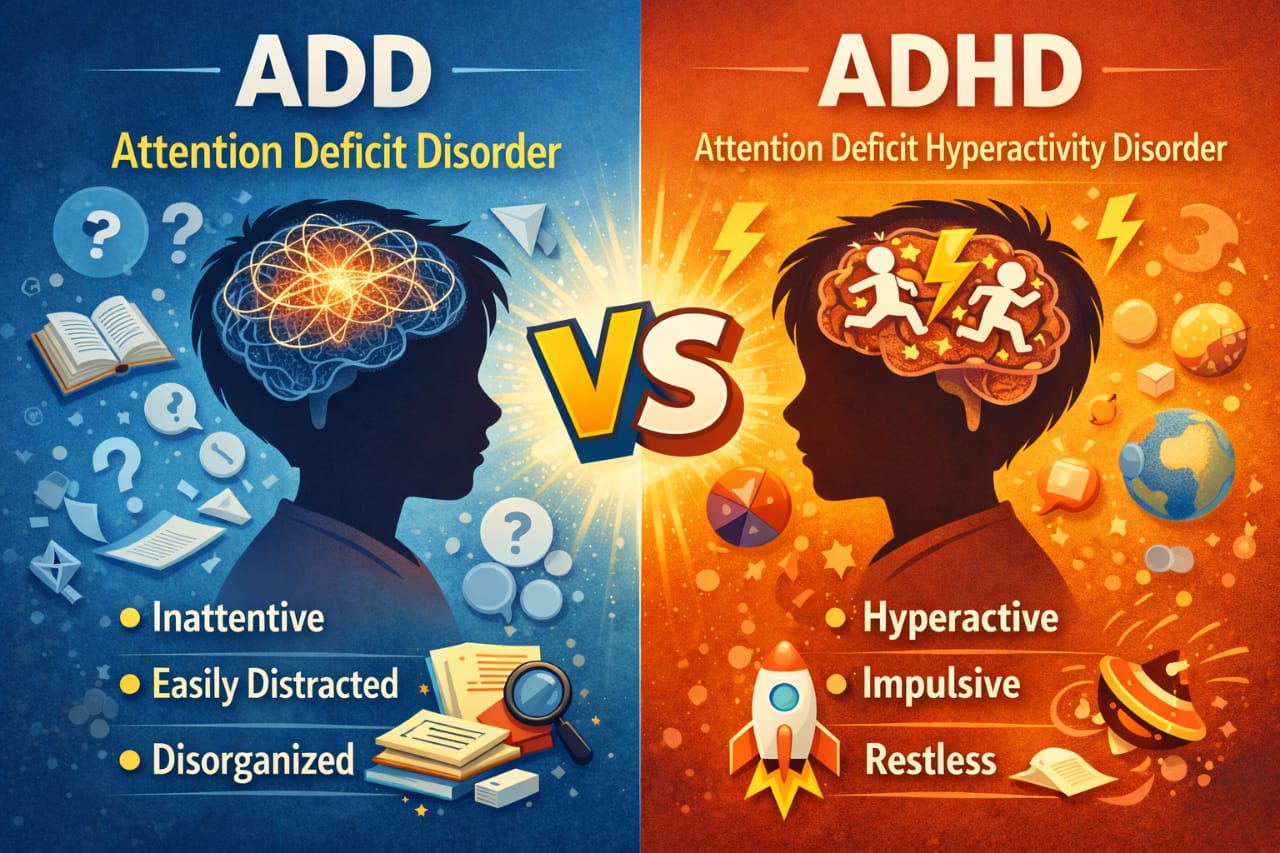
There are two popular terms for this disorder: ADD, Attention Deficit Disorder, and ADHD, Attention Deficit Hyperactivity Disorder. Many people feel ADD vs ADHD represents two different conditions. Others believe that ADD is simply outdated terminology.
Attention deficit disorder is no longer considered a valid medical term since the WHO-instituted standards for the ICD-11; it only recognizes ADHD as the correct terminology for the diagnosis. With this, the World Health Organization has managed to minimize confusion on the ADD vs ADHD debate.
Another reason why the issue of ADD vs ADHD has become a common debate is due to the fact that a number of people suffer from attention disorders without hyperactivity.
2. What is ADHD?
ADHD, in the context of Attention Deficit Disorder vs ADHD, stands for Attention Deficit Hyperactivity Disorder. It is a neurodevelopmental disorder which impacts attention, self-regulation, emotional regulation, and activity levels.
The WHO, according to ICD-11, defines ADHD as a persistent pattern of inattention and/or hyperactivity-impulsivity that impacts functioning or development. The comparison of ADD vs ADHD has to take note of this definition.
ADHD typically manifests during childhood; however, in certain cases, it extends into puberty and even later into adult life, further instigating the ADD vs ADHD debate across age groups.
3. What is ADD?
In the debate about ADD vs ADHD, ADD actually is an outdated term. Earlier, it was used to refer to those people with attention deficiency but without hyperactivity.
Key WHO Explanation
Thus, the WHO and current medical practices categorize all attention-related disorders under ADHD. This means that, according to the modern medical understanding of ADD vs ADHD, ADD no longer exists as a type of diagnosis.
What was previously referred to as “Attention Deficit Disorder” is today called ADHD – Predominantly Inattentive Presentation, thus laying to rest much of the ADD versus ADHD confusion.
4. ADD (Attention Deficit Disorder) vs ADHD: What’s the Main Difference?
| Feature | ADD (Old Term) | ADHD (Current WHO Term) |
|---|---|---|
| Formal Diagnosis | ❌ No | ✔ Yes |
| Applied by WHO | ❌ No | ✔ Yes |
| Hyperactivity | Usually absent | May be present or absent |
| Attention difficulties | ✅ Yes | ✅ Yes |
| Medical classification | Obsolete | ICD-11 |
This table clearly explains why ADD vs ADHD is no longer considered a comparison between two valid medical terms.
5. Types of ADHD (WHO & ICD-11 Aligned)
WHO recognizes ADHD as one disorder with various presentations, which allows for less confusion when looking at ADD vs ADHD.
5.1 Predominantly Inattentive Presentation
Previously known in the ADD vs ADHD era as ADD.
Common symptoms:
- Difficulty concentrating
- Distractibility
- Forgetfulness
- Poor time management
- Difficulty following instructions
- Daydreaming
- Appearing mentally absent
This presentation is more common in girls, often overlooked, and contributes to continued ADD vs ADHD misunderstandings.
5.2 Predominantly Hyperactive Presentation
This is the type most mentioned when people refer to ADD vs ADHD, due to the more noticeable nature of the hyperactivity.
Common symptoms:
- Constant movement
- Over talking
- Restlessness
- Impulsive behaviour
- Interrupting others
- Acting on impulse
5.3 Combined Presentation
Both inattentive and hyperactive symptoms are exhibited. This is the most common form and often forms a reference point in the ADD vs ADHD discussion.
6. Factors of ADHD: World Health Perspective
The WHO identifies ADHD as a disorder of biology, not as one brought about by poor parenting. This already clears up some of the misconceptions about ADD vs ADHD.
Major causes include:
- Genetics – ADHD tends to run in families
- Differences in brain development
- Neurochemical imbalances
- Prenatal and early-life influences
- Environmental influences
7. Symptoms of ADHD Across Different Age Groups
Understanding symptoms across ages helps explain misconceptions about ADD vs ADHD.
In Children
- Short attention span
- Hyperactivity
- Impulsivity
- Academic difficulties
In Teenagers
- Poor organization
- Emotional instability
- Risk-taking behaviour
- Academic underachievement
In Adults
- Chronic disorganization
- Time management problems
- Relationship issues
- Job insecurity
- Forgetfulness
8. WHO Recommendation: Diagnosis of ADHD
There are no blood tests for the diagnosis of ADHD, a common misunderstanding in ADD vs ADHD discussions.
Diagnosis requires:
- Medical and psychological assessment
- Parent, teacher, or caregiver reports
- Symptoms persisting for at least six months
- Symptoms present in multiple environments
WHO Warning: Online quizzes cannot diagnose ADHD; only qualified professionals can do so—this is important in the debate between ADD vs ADHD.
9. Why ADD vs ADHD Confusion Continues
The ADD versus ADHD confusion exists because:
- Until the 1990s, ADD was in wide use
- Media still uses the term ADD
- Many adults were diagnosed with ADD as a child
- Inattentive ADHD lacks hyperactivity
Despite this, WHO recommends using only ADHD instead of continuing the ADD versus ADHD terminology.
10. Treatment and Management
A very key clarification related to the ADD vs ADHD discussion is that WHO recommends a comprehensive approach rather than focusing solely on medication.
Treatment includes:
- Psycho-education
- Behavioural therapy
- Educational support
- Medication when necessary
11. Lifestyle Strategies
While lifestyle does not cause ADHD, healthy habits help control symptoms and reduce stigmatization associated with ADD vs ADHD:
- Exercising regularly
- Balanced diet
- Proper sleep
- Mindfulness practices
- Organized routines
12. Myths About ADD vs ADHD
❌ ADHD does not exist
❌ ADHD occurs only in children
❌ ADHD is caused by bad parenting
❌ The only treatment is medication
ADHD is a neurodevelopmental disorder recognized by WHO, hence ending many ADD vs ADHD myths.
13. WHO’s Global Perspective
The WHO recognizes ADHD as a public health issue affecting education, productivity, and mental health. Accurately addressing ADD versus ADHD contributes to early diagnosis and reduces stigma.
14. Conclusion
The debate between ADD and ADHD exists due to colloquial usage of terms that have been outdated. According to WHO, ADD is no longer a valid diagnosis, and all attention-related conditions come under the category of ADHD.
Understanding ADD vs ADHD correctly ensures accurate diagnosis, effective treatment, and reduced stigma. ADHD is not a weakness, and with proper awareness and support, individuals with this neurodevelopmental disorder can live a fruitful and fulfilling life.