
 Smit Halvadiya
 Introduction
Blood cancer is a group of cancers that affect the blood, bone marrow, and lymphatic system. According to the World Health Organization (WHO), blood cancers are classified as hematologic malignancies. These cancers interfere with the normal production and function of blood cells, which are essential for carrying oxygen, fighting infections, and preventing bleeding.
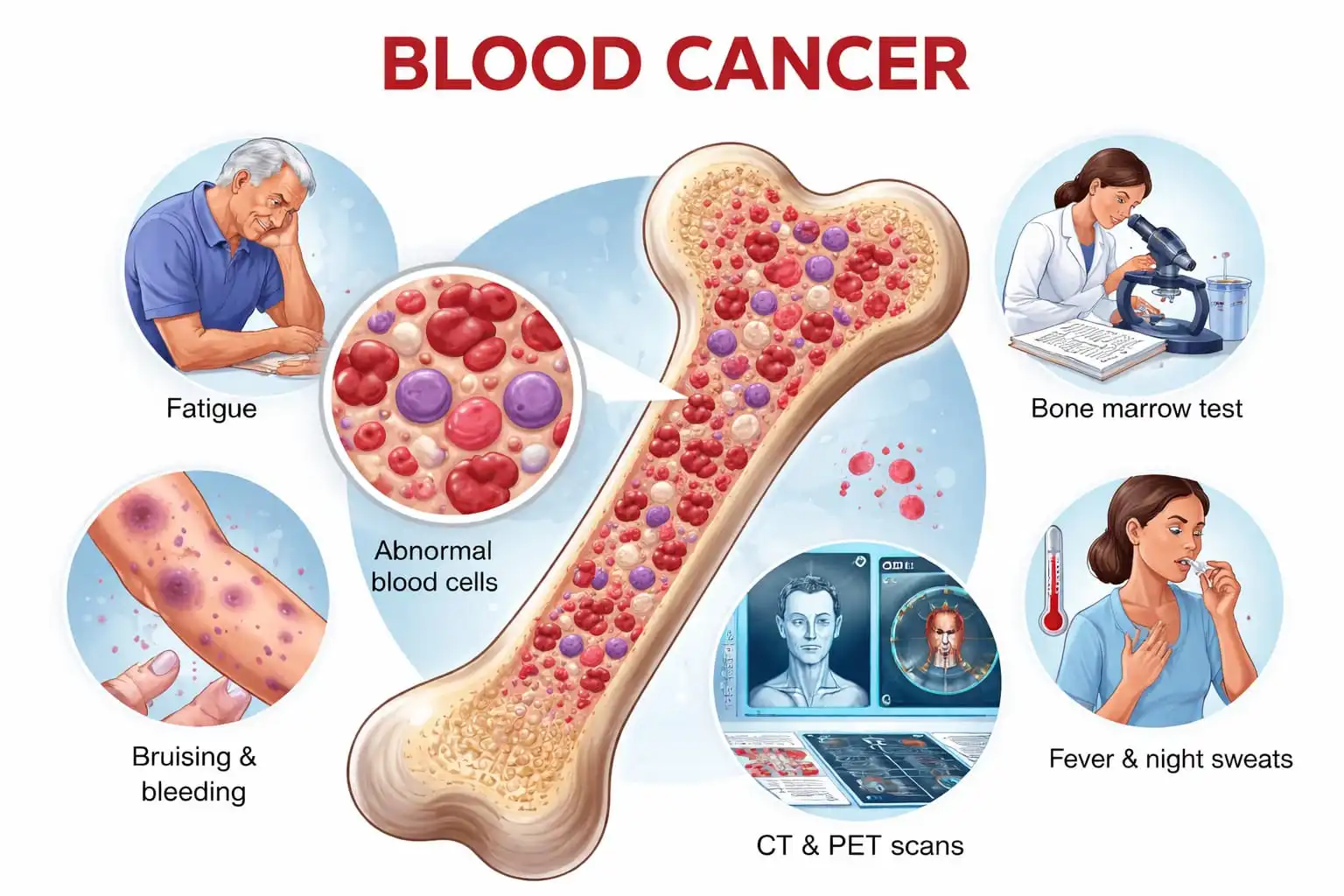
Unlike solid cancers that form tumors in organs, blood cancers usually begin in the bone marrow, where blood cells are produced. Abnormal blood cells grow uncontrollably and crowd out healthy cells, leading to serious health problems.
WHO emphasizes that early diagnosis, accurate classification, and appropriate treatment are critical for improving survival and quality of life in people with blood cancer.
How Blood Cancer Affects Blood Cell Production
Under normal conditions, bone marrow produces:
- Red blood cells (RBCs) – carry oxygen
- White blood cells (WBCs) – fight infections
- Platelets – help blood clot
In blood cancer, genetic changes (mutations) occur in blood-forming stem cells. These mutations cause abnormal cells to grow rapidly and live longer than normal cells.
As a result:
- Healthy blood cells decrease
- The immune system weakens
- Oxygen supply reduces
- Bleeding risk increases
WHO recognizes this abnormal cell growth as the central mechanism of blood cancer.
Causes of Blood Cancer (WHO Perspective)
According to WHO, blood cancer is caused by genetic mutations in blood-forming cells. These mutations are usually acquired, not inherited.
In most cases, the exact cause is unknown. However, WHO identifies several risk factors that increase the likelihood of developing blood cancer.
Major Risk Factors
Age
Blood cancer risk increases with age, especially leukemia and myeloma.
Gender
Males are more commonly affected than females.
Smoking
Tobacco smoke contains carcinogens that damage DNA and increase leukemia risk.
Radiation Exposure
High levels of ionizing radiation increase the risk of blood cancers.
Chemical Exposure
WHO confirms benzene, used in many industries, as a strong risk factor for leukemia.
Previous Cancer Treatment
Chemotherapy and radiation therapy can damage bone marrow DNA.
Genetic Conditions
Conditions such as Down syndrome significantly increase leukemia risk.
WHO states that lifestyle and environmental exposure play a major role in many cases.
Signs and Symptoms of Blood Cancer
WHO highlights that symptoms are often non-specific, which can delay diagnosis. Symptoms depend on the type and stage of cancer.
Common Symptoms
- Persistent fatigue and weakness
- Fever or repeated infections
- Unusual bleeding or bruising
- Purplish skin patches or tiny red spots (petechiae)
- Shortness of breath
- Swollen lymph nodes
- Bone and joint pain
- Night sweats
- Enlarged liver or spleen
- Unexplained weight loss
WHO advises seeking medical attention if these symptoms persist or worsen.
Types of Blood Cancer (WHO Classification)
WHO classifies blood cancers into three main groups:
1. Leukemia
Leukemia is cancer of the blood and bone marrow. It results in excessive production of abnormal white blood cells.
WHO classifies leukemia based on:
- Speed of progression: Acute or Chronic
- Cell type: Myeloid or Lymphoid
Leukemia affects both children and adults and requires early treatment.
2. Lymphoma
Lymphoma affects the lymphatic system, which is part of the immune system.
WHO divides lymphoma into:
- Hodgkin lymphoma
- Non-Hodgkin lymphoma
Common symptoms include painless lymph node swelling, fever, night sweats, and weight loss.
3. Myeloma (Multiple Myeloma)
Myeloma is cancer of plasma cells, which produce antibodies.
WHO notes that myeloma leads to:
- Bone damage
- Anemia
- Kidney problems
- Frequent infections
Diagnosis of Blood Cancer (WHO-Recommended Approach)
WHO recommends a step-wise diagnostic approach using laboratory and imaging tests.
Diagnostic Methods
- Blood Tests – Detect abnormal blood cell counts and shapes
- Bone Marrow Examination – Essential for confirming diagnosis and type
- CT Scan – Identifies lymph node or organ involvement
- PET Scan – Assesses disease spread and activity
- X-ray – Used mainly in myeloma to detect bone damage
- Physical Examination – Checks lymph nodes, liver, spleen, and general health
Accurate classification is critical because treatment depends on cancer type.
Treatment of Blood Cancer (WHO-Aligned)
WHO states that treatment should be individualized based on cancer type, stage, patient age, and overall health.
Main Treatment Options
- Chemotherapy – Destroys cancer cells using anti-cancer drugs
- Targeted Therapy – Targets specific molecules involved in cancer growth
- Radiation Therapy – Used to kill cancer cells or prepare for transplant
- Bone Marrow / Stem Cell Transplant – Replaces damaged bone marrow with healthy stem cells
- Immunotherapy – Strengthens the immune system to fight cancer
- Engineered Immune Cell Therapy (CAR-T Therapy) – WHO recognizes this as an advanced therapy for certain leukemias
- Clinical Trials – WHO encourages participation when appropriate for access to new treatments
Prevention and Early Detection
WHO emphasizes that not all blood cancers can be prevented, but risk can be reduced.
Preventive Measures
- Avoid smoking
- Reduce exposure to toxic chemicals
- Follow radiation safety guidelines
- Maintain a healthy lifestyle
- Regular medical checkups for high-risk individuals
Early diagnosis improves treatment success and survival.
Conclusion
According to the World Health Organization, blood cancer is a serious but increasingly treatable disease. Advances in diagnosis, targeted therapy, immunotherapy, and stem cell transplantation have significantly improved outcomes.
WHO strongly emphasizes:
- Awareness of symptoms
- Early diagnosis
- Access to appropriate treatment
- Continued research and clinical trials
With timely medical care and modern treatment, many people with blood cancer can live longer and healthier lives.