
 Smit Halvadiya
 Introduction
Gaining weight in a healthy way is just as important as losing weight. Many people struggle with being underweight due to fast metabolism, poor eating habits, stress, or certain medical conditions. Following a structured and nutritious diet plan can help increase body weight safely and effectively.
Healthy weight gain should not mean eating junk food or consuming empty calories. Instead, the focus should be on increasing calorie intake through nutritious foods rich in proteins, carbohydrates, healthy fats, vitamins, and minerals.
A useful way to track healthy weight is by monitoring your Body Mass Index (BMI). If your BMI is below the normal range, a proper weight gain diet plan can help.
Macronutrients for Weight Gain
1. Carbohydrates
Carbohydrates are the main source of energy and play a vital role in weight gain.
Healthy carbohydrate sources include:
- Rice, roti, bread
- Potatoes and sweet potatoes
- Oats and whole grains
Carbs provide energy and support muscle growth.
2. Proteins
Protein is essential for muscle growth and repair.
Good sources of protein:
- Eggs
- Chicken and fish
- Paneer, milk, and yogurt
- Lentils and beans
Protein helps repair tissues and supports healthy weight gain.
3. Healthy Fats
Healthy fats are calorie-dense and important for gaining weight in a healthy way.
Sources of healthy fats:
- Nuts and seeds
- Avocado
- Ghee and butter (in moderation)
- Oils like olive oil
Healthy fats provide extra calories and support hormone balance.
High-Calorie Nutrient-Rich Foods
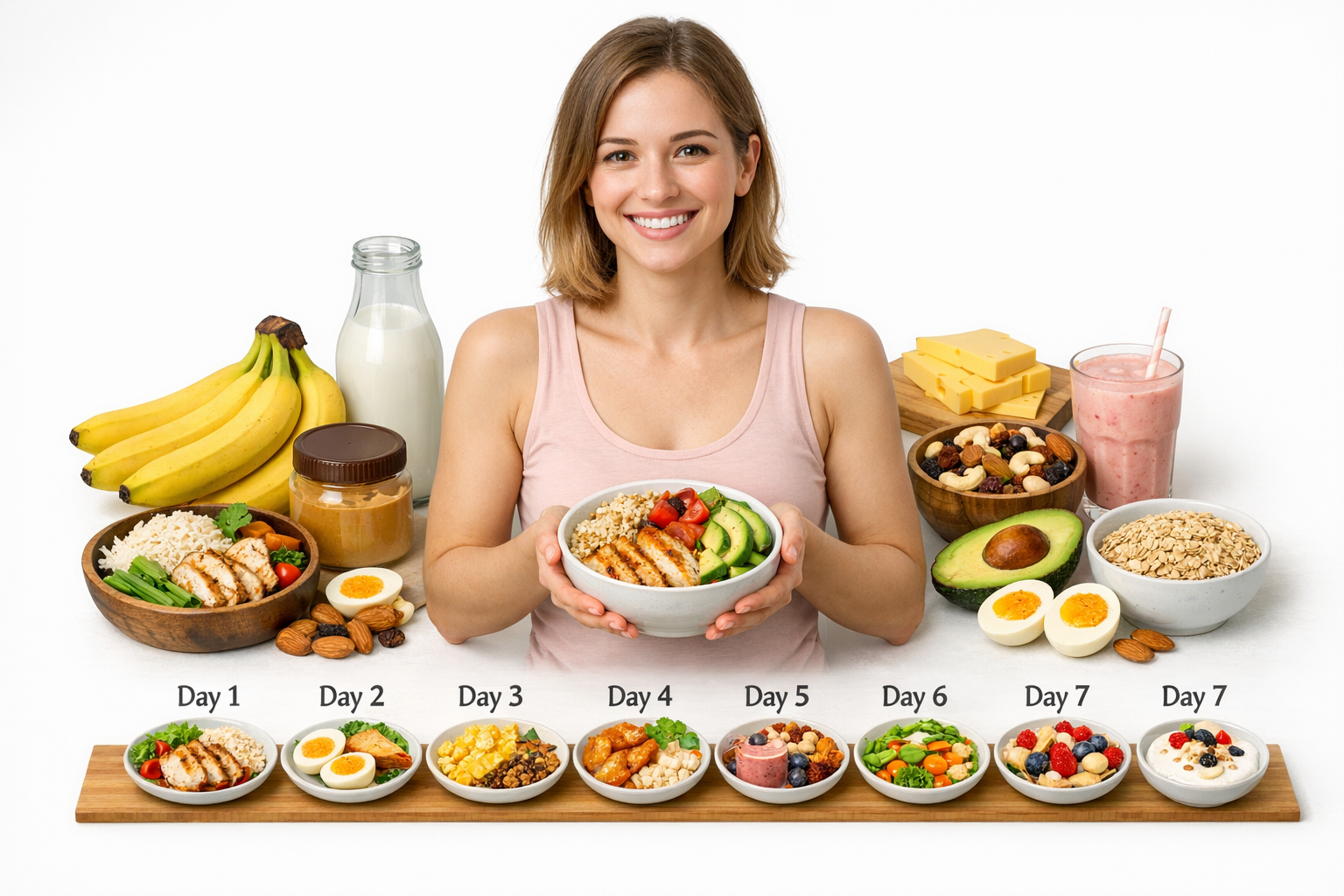
Not all calories are equal. Choose nutrient-dense, high-calorie foods such as:
- Dry fruits (almonds, cashews, raisins)
- Peanut butter
- Whole milk
- Cheese
- Bananas
- Smoothies and protein shakes
These foods help increase calorie intake without harming your health.
Foods to Avoid
To gain weight in a healthy way, avoid:
- Refined sugar
- Junk food
- Fried and processed foods
- Soft drinks
These may increase unhealthy fat and harm overall health.
Tips for Healthy Weight Gain
- Eat 5–6 meals a day
- Increase portion sizes gradually
- Include protein in every meal
- Drink high-calorie shakes or smoothies
- Exercise regularly, especially strength training
- Get enough sleep and rest
Role of Exercise in Weight Gain
Exercise is important for healthy weight gain. Strength training helps convert extra calories into muscle instead of fat.
Recommended exercises:
- Weight lifting
- Push-ups
- Squats
When to Consult a Doctor
If you struggle to gain weight even after following a healthy diet, consult a doctor or dietitian. Possible reasons include:
- Thyroid issues
- Digestive problems
- Nutritional deficiencies
Conclusion
A healthy diet plan for weight gain focuses on eating nutritious, calorie-dense foods while maintaining an active lifestyle. Avoid relying on junk food and instead choose whole foods that nourish your body.
With consistency, proper nutrition, and exercise, healthy weight gain is achievable.
Frequently Asked Questions (FAQs)
1. How long does it take to gain weight?
Healthy weight gain takes time. On average, you may gain 0.5–1 kg per week.
2. Can I eat junk food to gain weight?
No. Junk food can lead to unhealthy fat gain and may harm your overall health.
3. Is exercise necessary for weight gain?
Yes. Exercise helps build muscle instead of fat.
4. Can skinny people gain weight easily?
Yes. With a proper diet plan and consistency, weight gain is achievable.
5. Is milk good for weight gain?
Yes. Milk is rich in protein and calories and supports healthy weight gain.